How To Unlock The Pull-Up
Today we're going to be going over the best way to achieve your first pull-up. We'll be using the word pull-up as a general stand-in for chin-ups as well. The pull-up is an excellent body weight tool to develop the back muscles specifically the lats.
Pull-ups are also decent tools to develop the biceps. If you do a chin-up variation they target the biceps a little bit more. I don't subscribe to the belief that all you need to build impressive biceps is a chin-up variation. I think that bicep isolation work is important for muscle growth & injury prevention when you're doing heavy Pull-Ups. I spent years neglecting bicep isolation because I bought into the idea that compound movements are all you need. Lo and behold I started doing bicep isolations. My biceps got bigger and my pull-ups improved.
Back to the point: how do you get your first pull-up? Let’s establish some basics first.
Firstly, you need to be at a realistic weight.
Think about any weighted exercise. We inherently understand that a beginner isn’t going to be able to move advanced levels of weights around. They’ve got to work up to that.
We need to understand that pullups work the exact same way.
If you weigh a hundred pounds, pull-ups are going to be easier. You can expect to get them much quicker. if you weigh 300 pounds you need to think about how many people are actually able to do pull-ups with a total weight of 300 pounds and then you need to scale your expectations with that.
So if you are anywhere over 215 lb and a true beginner, just due to your body composition pull-ups are going to be very difficult and will take a while to achieve. Losing weight is the fastest solution. If you are a 220 lb bodybuilder who just so happens to never do pull-ups you'll probably be fine. You're not a beginner anymore. If you are a 185lb beginner pull-ups are going to be considerably easier and you can scale your expectations with that in mind.
I’m am not saying it’s impossible to do a pull-up while being heavier, just as it’s not impossible for a beginner to pull 315 their first time deadlifting. I’m just saying that it will make things quite a bit more difficult. But it’s cool to do difficult things.

The second thing is to make sure you are doing some horizontal rows.
You should be doing cable rows, bodyweight rows, dumbbell rows, Etc. You can work the same muscles that in a pull-up by doing rowing movements, so you can get your muscles stronger by moving lighter weights to better prepare them for that heavier pull-up. Rows can help you become strong enough to do pull-ups. In my opinion, they alone will not be enough, but they absolutely are part of the equation.
If you’re at a good weight and are strengthening your back muscles with a horizontal pull, the final factor is deciding on the BEST vertical pull to help you get your weight chin up.
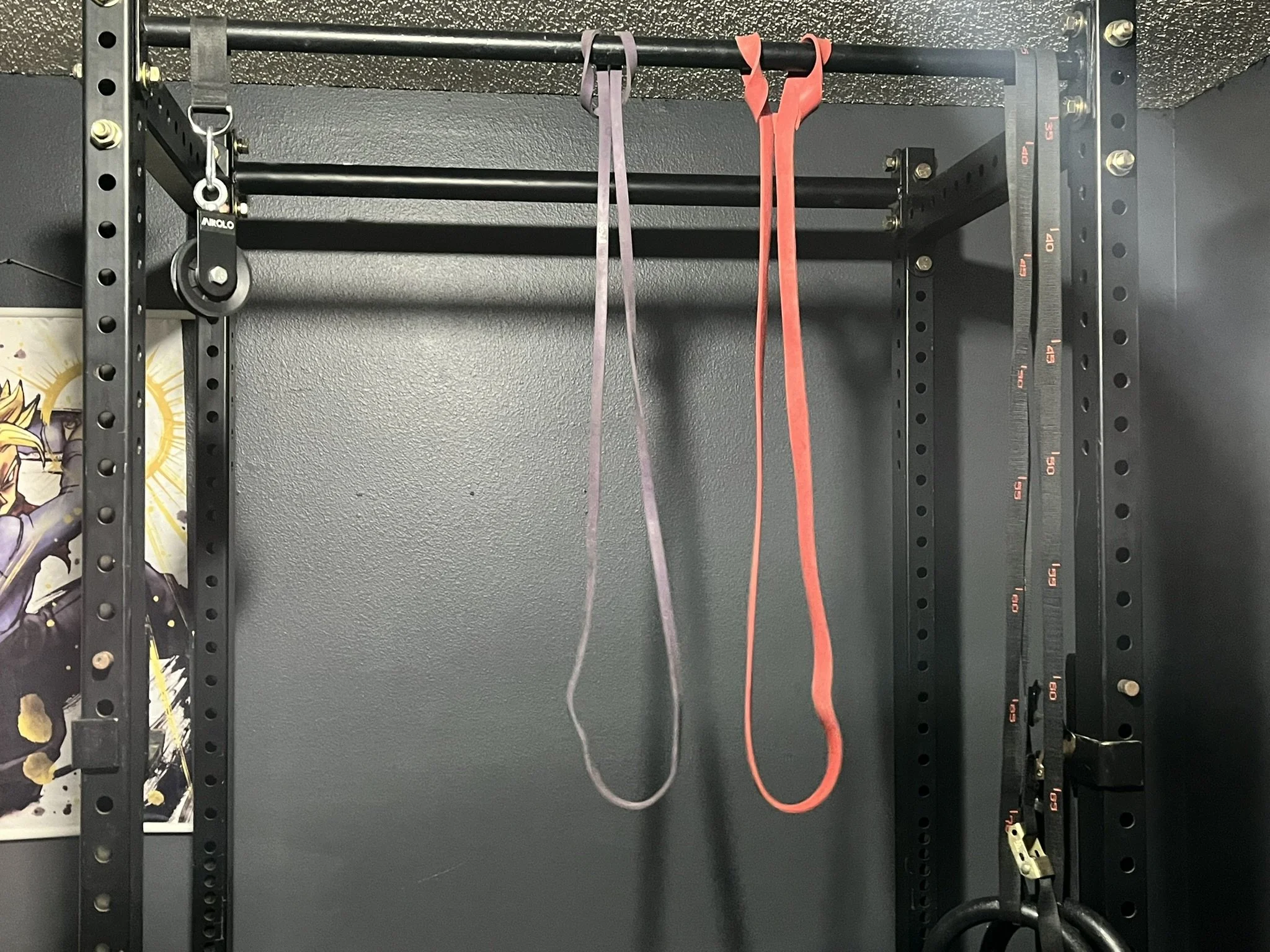
There are multiple different ways to do this. Some people prefer the banded pull-up.
Here you select a band that causes the pull-up to be easy enough for you to complete.
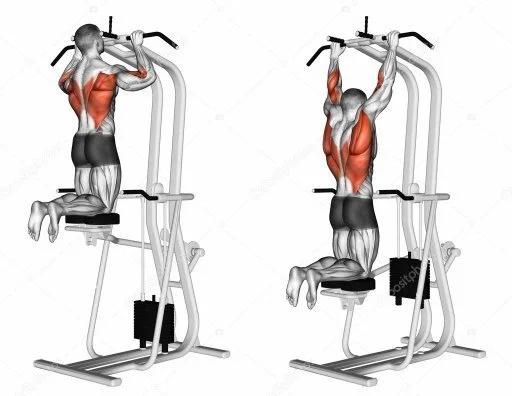
Another excellent tool is the assisted pull-up machine. Here, you do the opposite of what you do with any other machine. You decrease the weight as you progress which causes your muscles to lift more and more of your body weight.
This would max out at your body weight. At that point, you’re justdoing normal pull-ups!
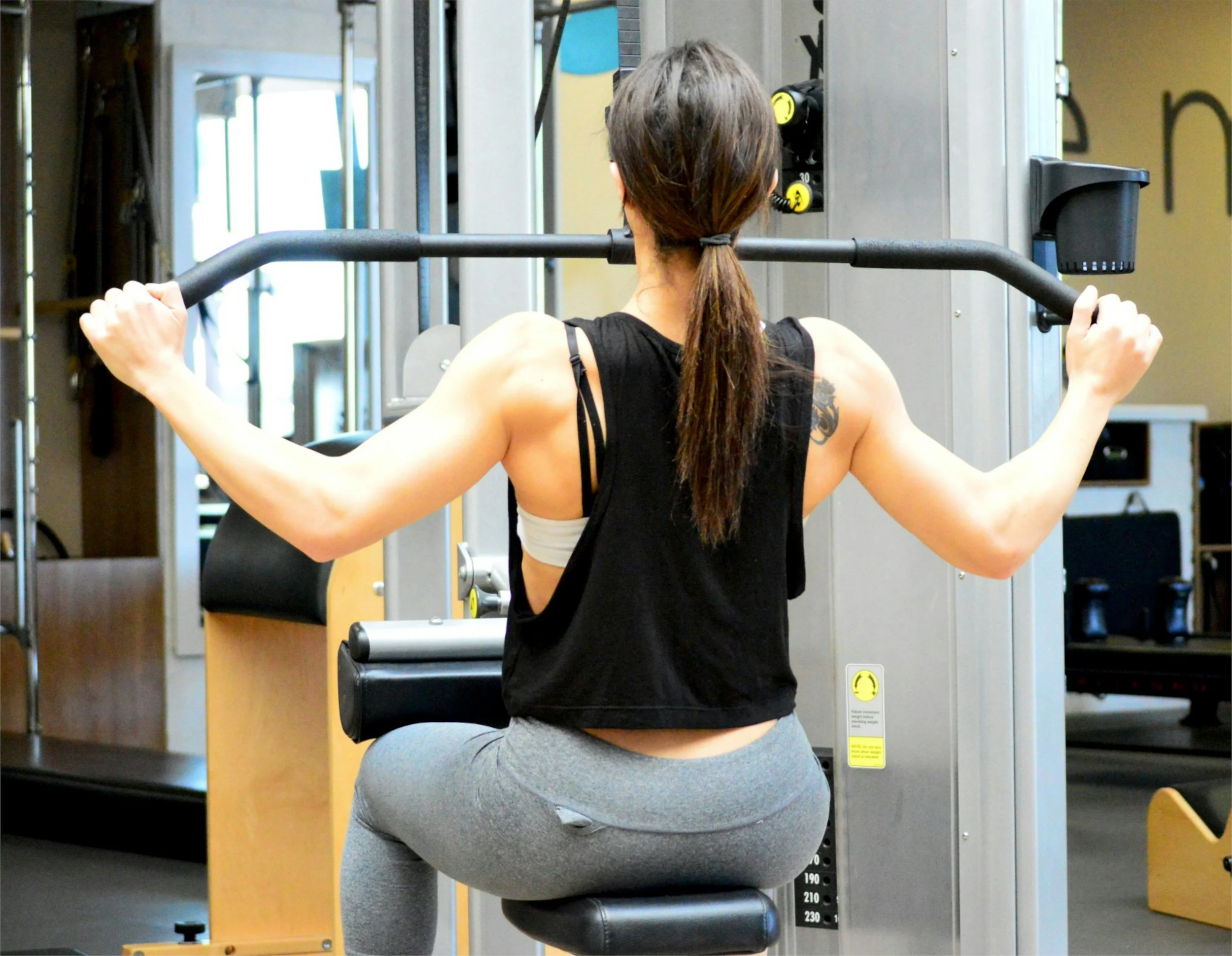
Another excellent example is the lat pulldown machine.
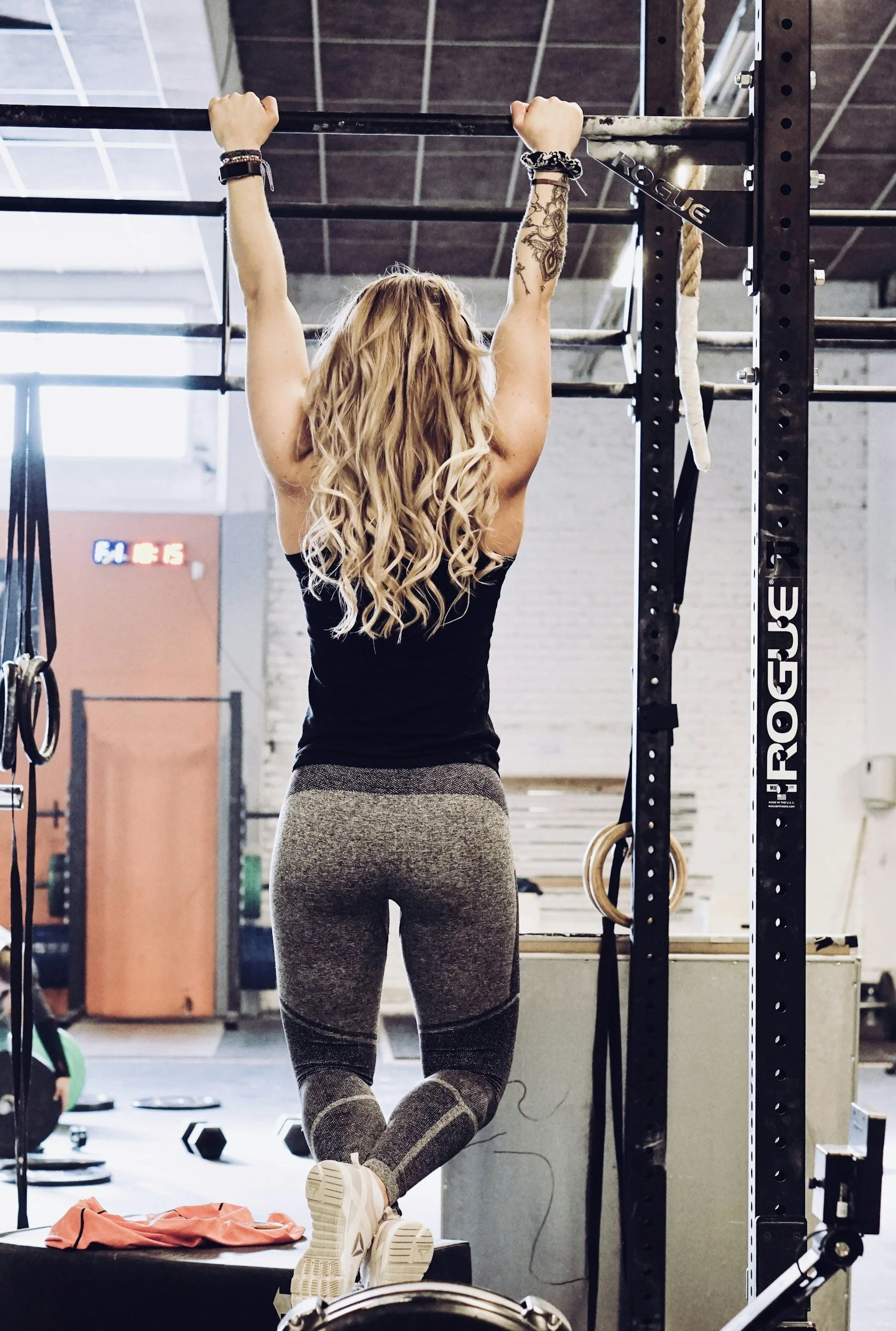
In my opinion, all of these tools pale in comparison to the simple negative pull-up.
With the negative pull-up, you grab the bar and jump until your chin is over the bar then slowly lower yourself down. Or you can find an object to step on that will put your chin above the bar and then lower yourself down.
The only real contenders, in my opinion, are the assisted pull-up machine followed by the lat pulldown machine.
Negative pull-ups, The lat pull-down machine, and the assisted pull-up machine all keep the same strength curve as normal pull-ups; they all keep to the same movement pattern and a feature of the two machine variations I've mentioned is that they are very easily progressively overloaded.
Now what does the negative pull-up have over these other two? Simply put, all you need is a pull-up bar. Not every gym has an assisted pull-up machine. It can be somewhat difficult to find. if every gym had one of these machines, or if you had one in your house, then I would almost argue that this is the best way to achieve your first pull-up.
Due to the rarity of the machine, I just can’t rank it that high.
The lat pulldown machine has the benefit of easy progressive overload. it more or less follows the same resistance curve as a normal pull-up, but because you are seated the body position is just a bit too different. In my experience, it’s a little harder for the strength to translate directly to a pull-up.
With the negative pull-up you are doing half of a pull-up. All of the muscles and body positioning are the same as if you were doing a pullup. That specifically puts a negative pull-up above a lat pull-down machine. And the fact that all you need is a bar puts it over the assisted machine.
As for the banded pullup… Yes, maybe you are doing a pull-up, but the bands provide the most benefits at the easiest portion of the exercise, and it provides the least benefit at the top, contracted position, where you really need that help. Bands help you when you don't need them, and then leave you high and dry when you do need them.
They’re also somewhat difficult to progress. The jump from band to band can be intense, ramping the difficulty higher than what you’re ready for.
With negative pullups, you can easily scale the difficulty by adding reps, or by increasing the length of the negative. If you can do:
”3 consecutive negatives, done with uniform speed, that last 7-10 seconds each with a full range of motion—-
— “You can usually do one full rep”.
Overcoming Gravity, the second edition, written by Steven Low
This gives you an excellent goal to work towards.
Negative pull-ups done two, maybe three times a week, with the goal of slowing that eccentric down more and more every time should get you your first pull-up. Overcoming Gravity suggests something along the lines of:
2-3 sets of 2-3 reps of 4-second negatives, until you work your way up to 10-second negatives.
I agree with this and would actually suggest just going with 3x3-5 reps of 4-second eccentrics. Try to increase the length of the negative each training day, or each training week.
At that point when you can do one or two of the actual pullups, I would strongly recommend that you begin doing as many as you can and then you fill in the gaps with negatives. So aim for 3x8. If you can do two pull-ups, you’ll do 6 more reps of negative pull-ups to finish the set.
Another thing you can do that has worked well for me is the Russian fighter pull-up program, or try greasing the groove- performing one or two pull-ups every hour to build volume through the day.
“So, if you can…
Perform three consecutive eccentrics
With uniform speed lowering
For seven to ten seconds each
through full range of motion
… you can usually do one full repetition.”
Steven Low, Overcoming Gravity Second Edition
To summarize:
The Best Way To Get Your First Pull-Up:
Be a realistic weight
Do some horizontal pulling. Cable Rows, etc.
Pick a Good Vertical Pull
You picked Negative Pull-Ups, didn’t you?
Don’t stop now. Unlock MORE Pull-Ups